Product Categories
- Cyclones & Insertable Filters (3)
- Dust Extraction Systems – Dust Collectors (23)
- Engineered Products (2)
- Fume Extraction Systems (8)
- Filter Box (1)
- Fume Arms (2)
- Hose Reels (1)
- Industrial Fans (2)
- Modular Ducting (21)
- Respirable Dust Suppression Systems (4)
- Rotary Valves (1)
- Safety & Explosion Systems (2)
- Spark Trap (1)
- Shredders, Hammermills & Briquetters (6)
- Spare Parts & Accessories (29)
- Dust Collector Accessories (3)
- Dust Vacuum Wand Kits (3)
- Flexible Ducting (19)
- Abrasive Flex (3)
- CNC Flex (1)
- Food Grade Flex (1)
- Fume, Welding & Exhaust Flex (3)
- High Temperature Flex (3)
- Metal Flex (1)
- PVC & TPR (2)
- Specialty Hoses (2)
- Timberflex (3)
- Ventilation Flex (1)
- Hose Clamps (2)
- Wood Waste Fired Heat Plants (1)


DRY FOG
$0.00
Dry Fog – Ultra-Fine Dust Suppression System
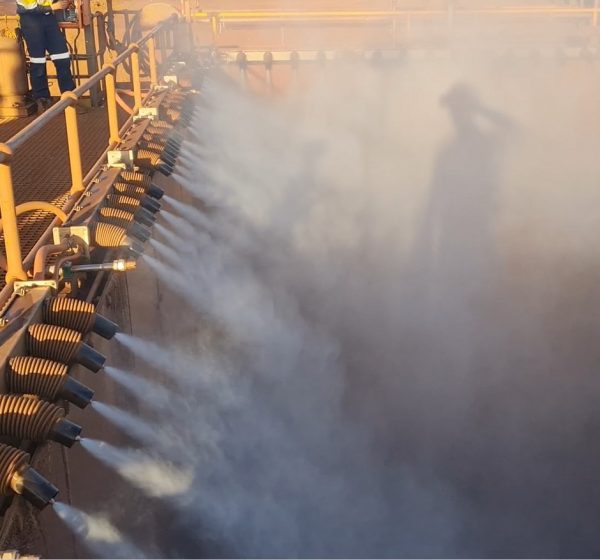
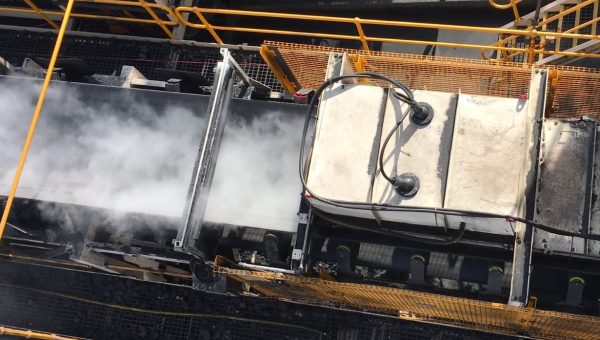
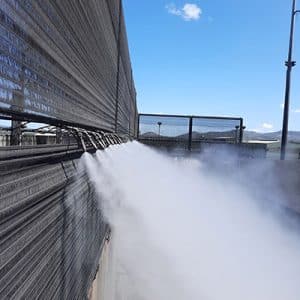
Airtight Solutions’ Dry Fog system delivers advanced dust control using air-atomising nozzles that generate ultra-fine water droplets (≈10 microns or less) to capture and settle airborne dust without adding moisture to your product or process. Engineered for industrial and material-handling environments, this technology effectively suppresses respirable dust at transfer points, conveyors and enclosed transfer zones while using minimal water — keeping work areas cleaner, safer and compliant with health and safety standards.
- Description
Description
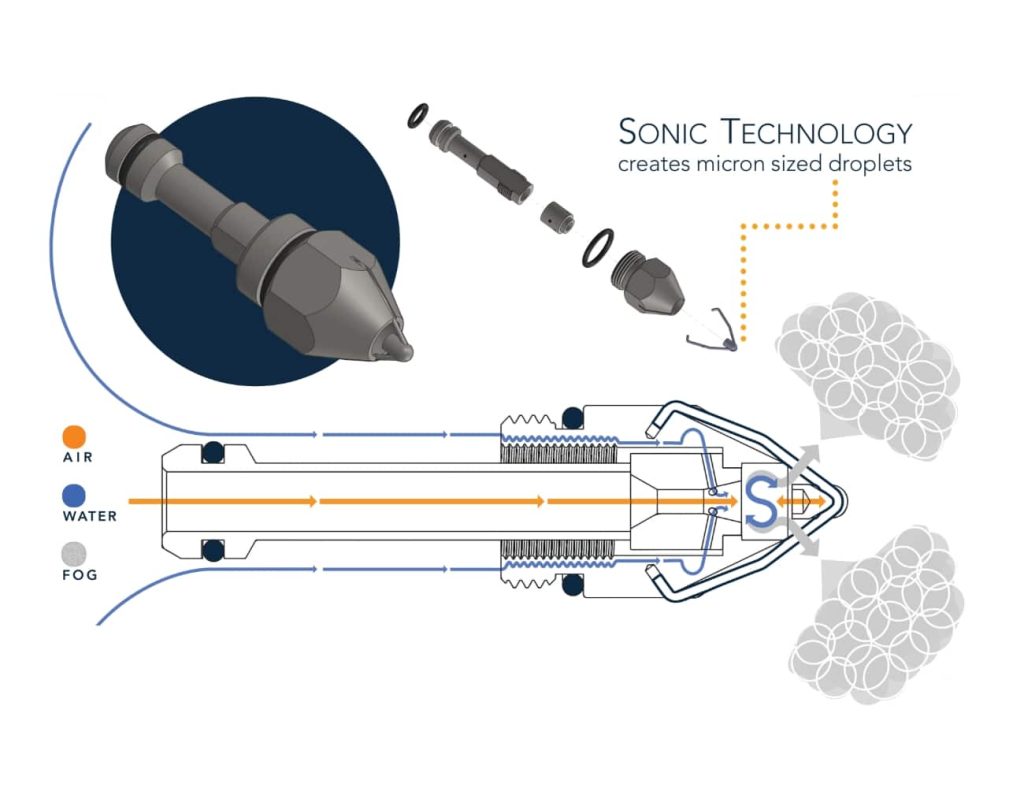
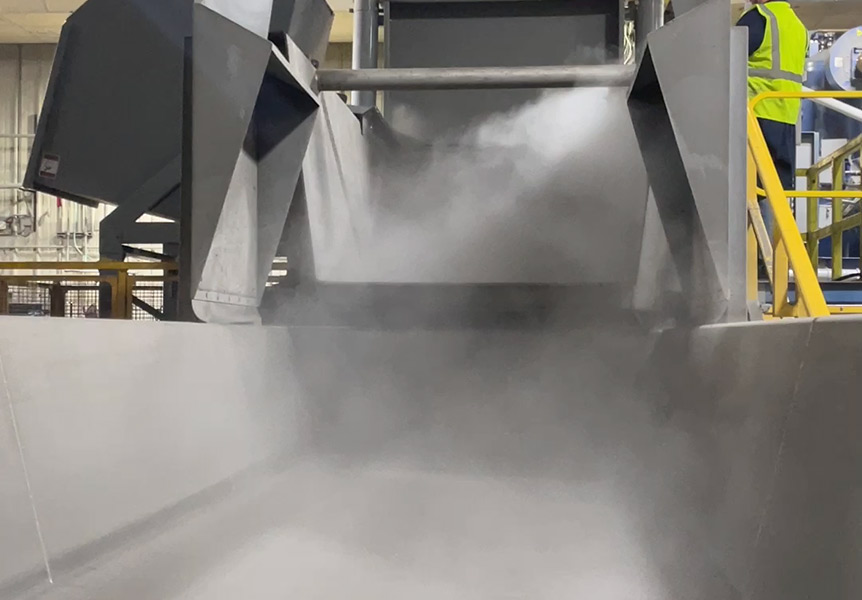
We create dry fog. Our technology uses air atomizing nozzles that produce water droplets 10 micron or less. These ultra-fine water droplets add less than 0.1 percent of moisture by weight and attach to like size dust particles and drop them back into the process.
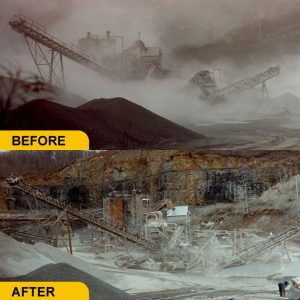
DSI Dry Fog systems are designed and engineered to effectively reduce fugitive dust at material handling points.
Dry Fog Theory
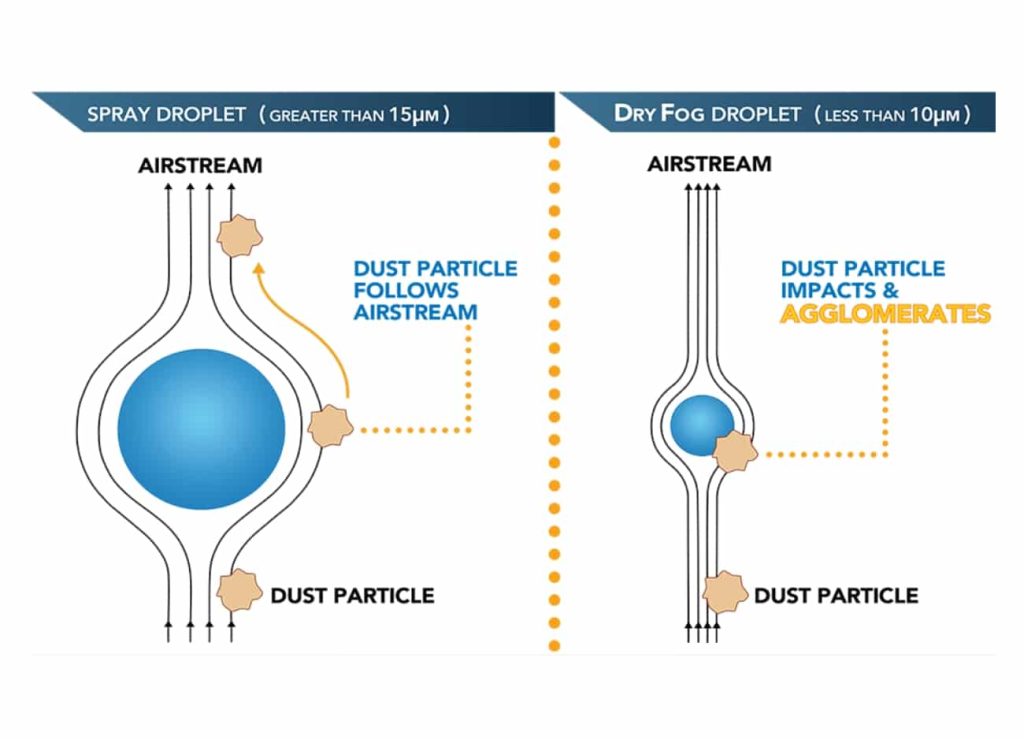
The use of Dry Fog for dust suppression is based on the concept of agglomeration. Dry Fog technology uses compressed air and plain water to create micron sized droplets. When like-sized droplets and dust particles collide, agglomeration occurs which results in larger particles that fall back into the process by gravity because they are too heavy to remain suspended in the air.
To achieve agglomeration at the dust source, equal amounts of like sized particles of water droplets and dust particles must exist and they must be contained in an enclosed area.
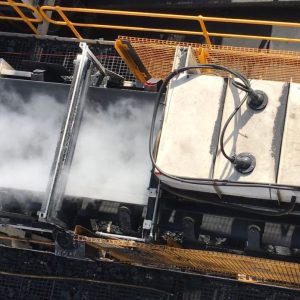
At the treatment point, fog droplets are used to blanket the dust source and prevent the dust particles from becoming airborne.
Where does it work?
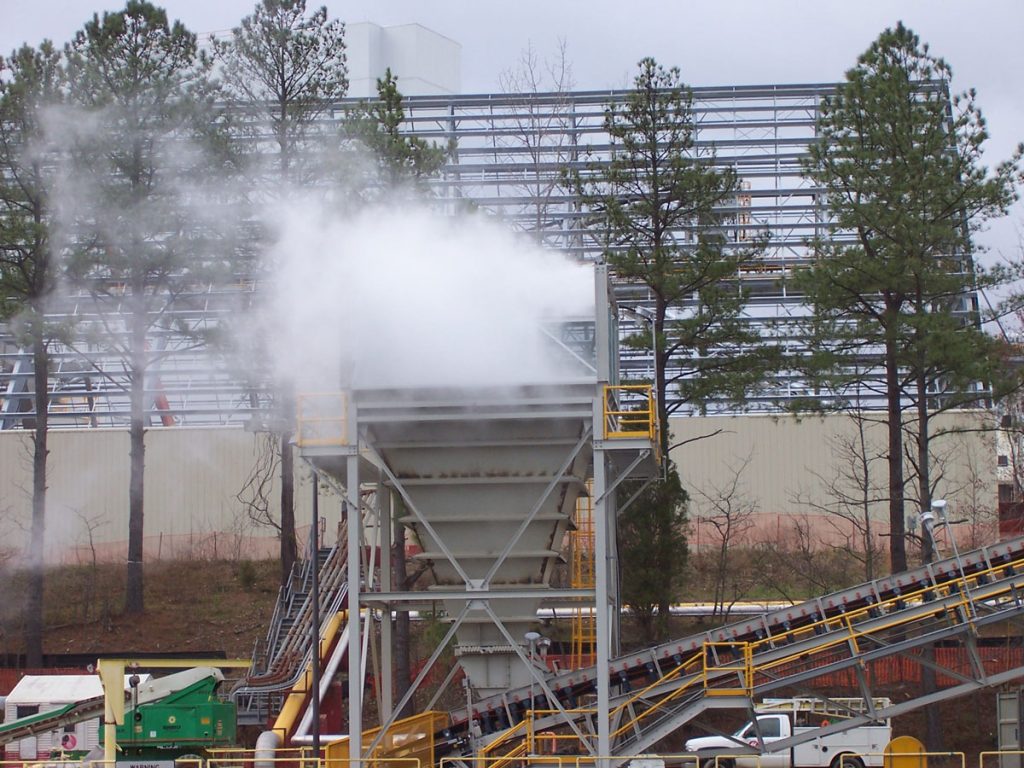
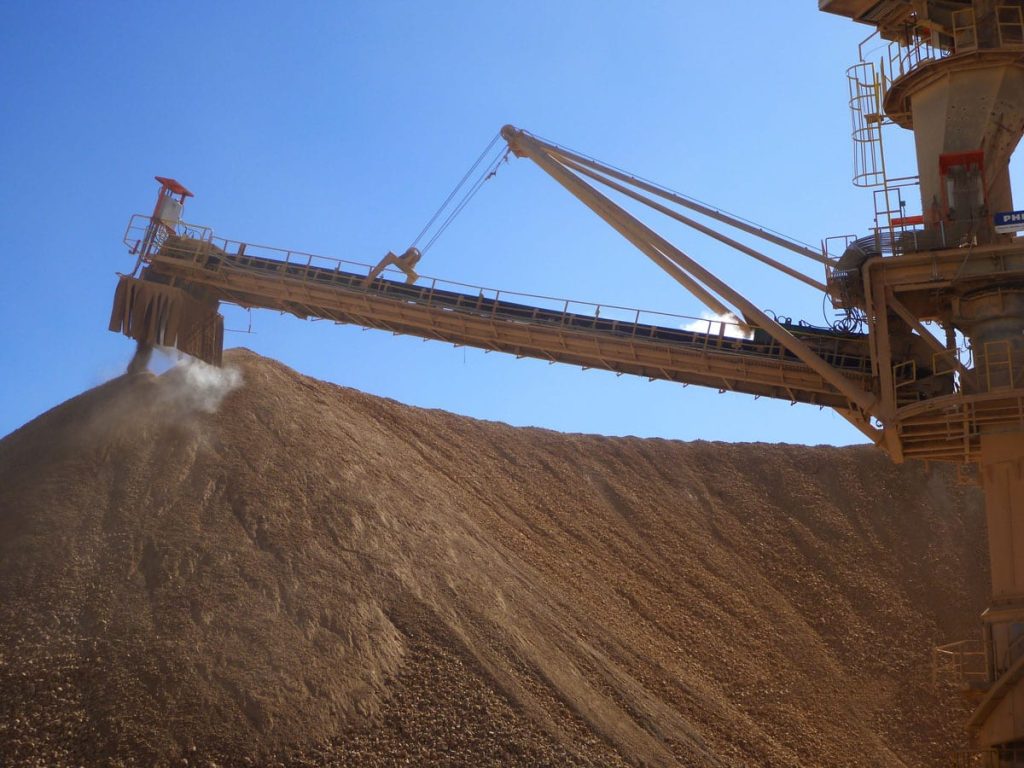
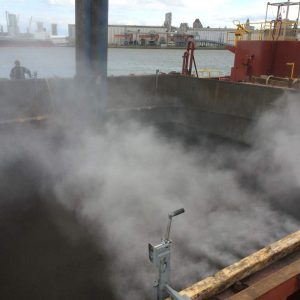
Our Dry Fog systems significantly reduce fugitive dust from a variety of material handling points, including conveyor transfer points, trippers, reclaimers, crushers, screens, truck dumps, railcar loading/unloading, ship loaders-unloaders, and ash silo discharge chutes. Our systems can meet all requirements for explosion hazard areas. Freeze protection can be provided for systems operating in temperatures as low as -60 degrees C.
What are the Advantages
Ease of installation, simplified maintenance, and flexible system configuration are just a few advantages of using Dry Fog to suppress dust. The overall capital investment and operating costs can be more affordable than the cost of ventilation and chemical type systems.
Comparisons
Other technologies can’t compete. Dry Fog excels as the most effective, safe and economic method of dust suppression in heavy industrial applications.
Dry Fog Vs Water Cannon
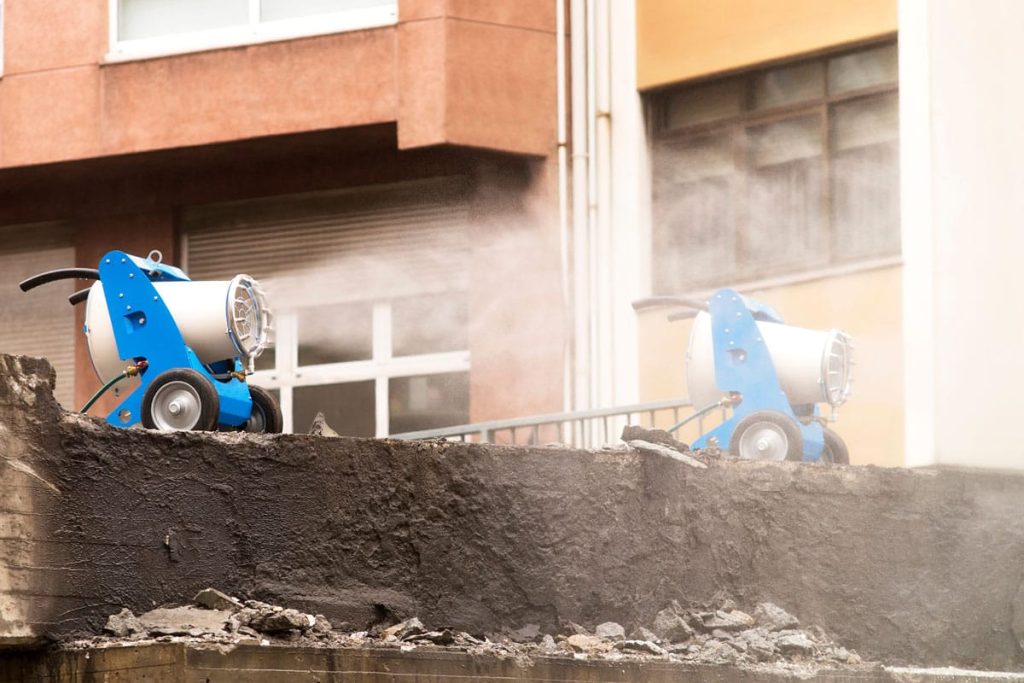
Water consumption for cannons is measured in gallons per minute ranging from 12 to 30 GPM versus Dry Fog systems which measure nozzle water usage in gallons per hour at 3-13 GPH. Using significantly higher water consumption can lead to BTU loss for fuels, material wetting issues, unstable loads for ships and slip and fall hazards. Water cannons are not able to achieve the level of dust suppression (0 to 10 um) of Dry Fog or suppress respirable dust due to droplet size.
Dry Fog Vs Duct Collection System
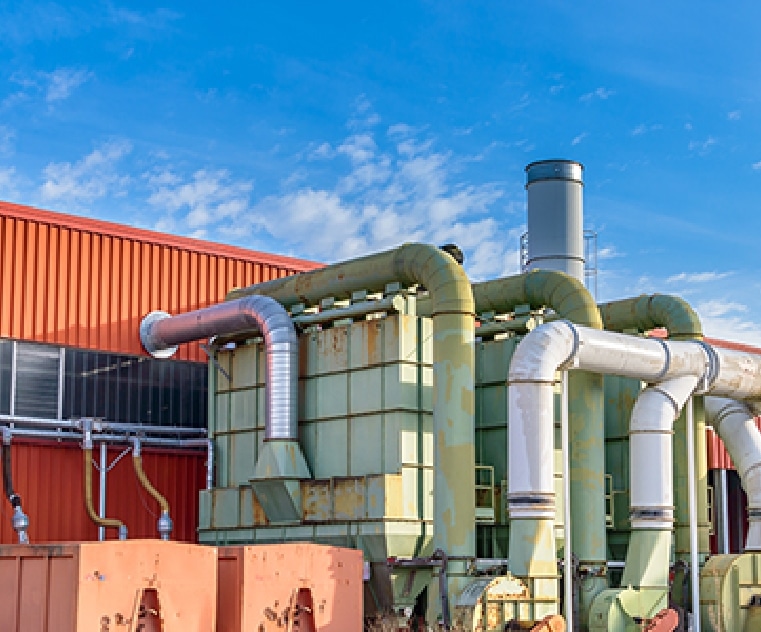
Dust collection systems, commonly referred to as baghouses, remove particulates from the air during industrial processes for large applications. A significant capital investment is required to install a dust collection system which includes infrastructure and duct work in addition to ongoing maintenance to keep moving parts, motors and fans operating at maximum operational efficiency. And while effective, dust collection systems often achieve similar results to other technologies such as Dry Fog at a costlier price point. A cost comparison report submitted to the U.S. Environmental Protection Agency estimates that the cost to purchase, operate, and maintain dust collection systems is 4 time more than dry fog systems.
Chemical Dust Suppression
Chemical dust suppression systems use chemical surfactant in an attempt to bind dust particles together or break up the surface tension of the water, increasing its ability to penetrate the conveyed material. After installation, chemical systems require long term expenditures on chemicals to operate the system and also require administrative and safety management for chemical transportation, storage and record keeping (MSDS). Similar to other spray systems, chemical systems wet the material which has the potential to affect BUT value for fuel sources and wet the equipment which can lead to further maintenance requirements.