Wherever you work.
Whatever you work with.
Dust & Fume exposure limits are changing.
1st December 2026.
Schools – TAFE – Industry
New Workplace Exposure Limits take effect
1 December 2026.
Are you compliant??
Effective dust extraction is essential for schools and TAFEs operating woodworking, design technology, construction, STEM and materials workshops.
Airtight Solutions designs and supplies dust extraction systems for Australian education facilities, helping control airborne wood dust and combustible dust while supporting the safety, performance and compliance requirements of modern school and TAFE workshops.
From individual dust collectors through to complete extraction systems, ductwork, installation and commissioning, our experienced team can help you select and implement the right solution for your facility.


Are you ready for Australia's changing dust & fume exposure requirements?
From 1 December 2026, Australia’s Workplace Exposure Standards will transition to Workplace Exposure Limits (WELs) for airborne contaminants.
For education facilities with woodworking and materials workshops, this is an important opportunity to review existing dust extraction systems and confirm they remain suitable for the activities, equipment and dust generated within the workshop.
For softwood dust, the new workplace exposure limit is lower than the previous exposure standard, reinforcing the importance of effective dust control and exposure management.
A dust extraction system should do more than collect visible dust. It should be appropriately designed, installed, maintained and operated to control dust at its source.
Is your school or TAFE workshop ready?
Airtight Solutions can assess your existing dust extraction requirements and help identify opportunities to improve system performance, safety and ongoing operation.
Why is dust extraction important?
Woodworking and materials workshops can generate significant quantities of fine airborne dust.
Without effective extraction, dust can become airborne, settle throughout the workshop and contribute to poor working conditions. Where combustible dust is present, accumulation and uncontrolled dust can also introduce additional fire and explosion risks.
A properly engineered dust extraction system helps to:
- Capture dust close to the point of generation
- Reduce airborne dust within the workshop
- Maintain a cleaner working environment
- Protect machinery and workshop equipment
- Improve workshop housekeeping
- Manage combustible dust risks
- Support workplace health and safety requirements
- Provide appropriate filtration and dust collection
- Support the requirements of relevant education facility standards
Effective dust extraction should be considered as part of the overall workshop design – not simply as an add-on after machinery has been installed.


Fume Extraction for Your Workshops
Welding, fabrication, automotive and other technical training workshops can generate significant quantities of airborne fumes, gases, vapours and fine particulates.
Without effective extraction, these contaminants can enter the breathing zone of students, teachers and staff and spread into surrounding workshop areas. The type and level of exposure will depend on the processes undertaken, materials used and the effectiveness of existing controls.
A properly engineered fume extraction system helps to:
- Capture fumes and airborne contaminants close to the point of generation
- Reduce contaminants entering the breathing zone
- Reduce the spread of fumes throughout the workshop
- Maintain cleaner, safer working and learning environments
- Support welding, fabrication, automotive and mechanical training activities
- Provide appropriate filtration for the contaminant and application
- Improve overall workshop air quality
- Support workplace health and safety requirements
- Support the requirements of relevant education facility standards
Effective fume extraction should be considered as part of the overall workshop design – not simply as an add-on after equipment and workstations have been installed.
Where practicable, local exhaust ventilation (LEV) should capture contaminants as close as possible to their source, before they disperse into the workshop or enter the breathing zone.

Dust & Fume extraction, standards & compliance
Dust extraction systems in Australian education facilities need to be designed with the application, dust characteristics, workshop layout and relevant standards and requirements in mind.
Depending on the project and location, requirements may include consideration of:
- AS/NZS 4745 – Code of Practice for Handling Combustible Dusts
- Applicable workplace health and safety legislation
- Workplace Exposure Limits for airborne contaminants
- State or territory education facility requirements
- Dust collector and filtration performance
- Ductwork design and transport velocities
- Dust collection and disposal
- Explosion relief
- Electrical and mechanical safety
- System commissioning and maintenance
For example, current Victorian government school building requirements specifically address dust extraction systems, including shaker-cleaned filter media, bin-type dust collectors, explosion relief and appropriately designed ductwork.
Education facility requirements in Queensland also reference AS 4745 and include requirements relating to dust extraction, explosion relief and ductwork design.
Every workshop is different
Compliance is not simply a matter of selecting a dust collector.
The complete system should be assessed according to the dust being generated, machinery, airflow requirements, ductwork, filtration, collection, explosion protection, workshop layout and applicable requirements.
Airtight Solutions works with schools, TAFEs and education facility stakeholders to engineer dust extraction solutions around the specific application.
Airtight CDS Series Dust Collector

CDS Series features
- Compact design
Designed to fit within the space constraints commonly found in school plant rooms and workshops. - High-capacity extraction
Available in different configurations to suit varying workshop requirements. - Shaker-cleaned filtration
Electrical shaker cleaning helps maintain filter performance and supports straightforward maintenance. - Smart controls
PLC controls, pressure monitoring and automated cleaning help simplify system operation. - Explosion relief
Explosion relief is incorporated as part of the system’s safety design for applicable combustible-dust applications. - Australian-made
Designed and manufactured for Australian and New Zealand operating conditions. - Modular ducting options
Quick-fit modular ducting can simplify system installation and future workshop modifications.
The CDS Series is available in CDS-4000 and CDS-8000 configurations, with additional fan, bin and ducting options available to suit the application.
Supporting Safer Dust Extraction Systems
Effective dust extraction involves more than capturing airborne dust. The right system components can also help manage fire, spark and backflow hazards, supporting a safer working environment.
Explore two safety products designed to provide additional protection within industrial dust extraction systems.
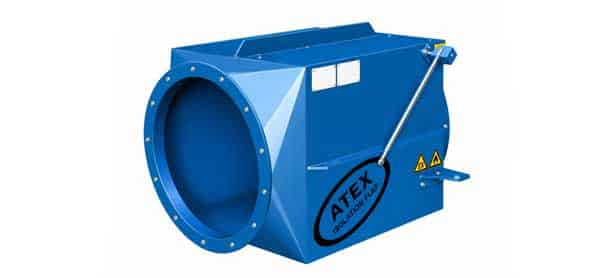
CARZ Non-Return Valve
Help prevent hazardous backflow
The CARZ Non-Return Valve is designed to help prevent reverse airflow and provide passive explosion isolation in suitable dust extraction systems, reducing the risk of flame and pressure propagation through ductwork.

Spark Trap for Dust Extraction Systems
Reduce spark-related fire hazards
Designed to capture and separate sparks before they reach downstream dust collection equipment, the Spark Trap provides an additional layer of protection for industrial dust extraction systems where ignition sources may be present.
Engineered for your workshop.
Designed for your needs.
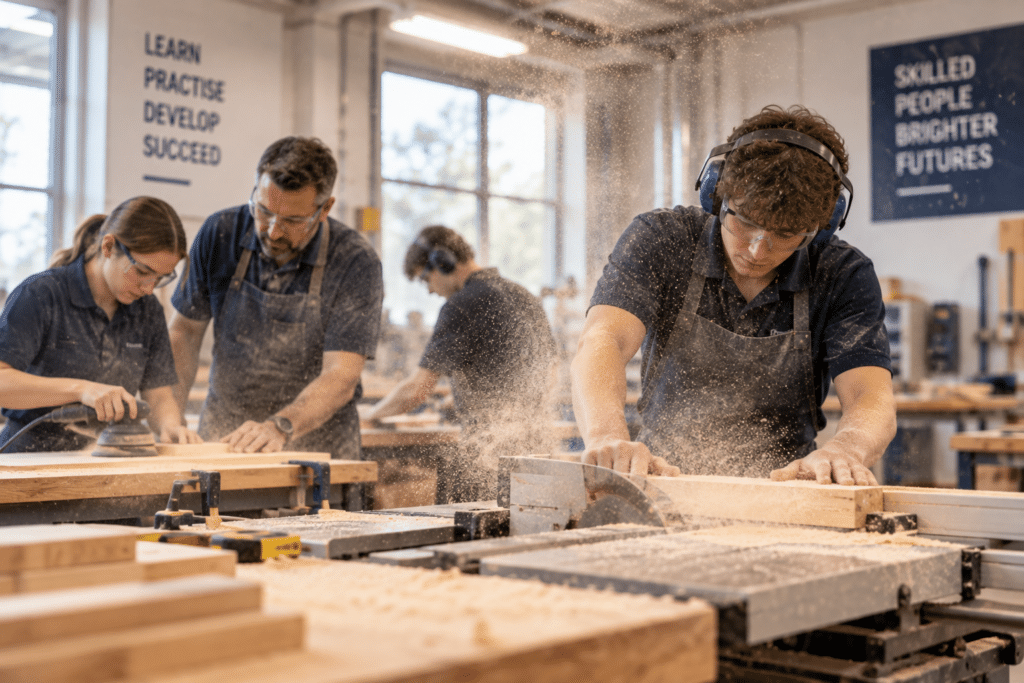
No two workshops are the same. Different environments, machinery, processes and airborne contaminants require different approaches to dust and fume extraction.
Effective extraction should therefore be considered as part of the overall workshop design – not simply as an add-on after machinery has been installed.
At Airtight Solutions, we offer a wide range of Australian-made dust and fume extraction systems, engineered and customised to suit the specific requirements of your facility. From individual extraction points and ductwork through to filtration, dust collectors and complete extraction systems, we can help design the right solution for your application.
Whether you are planning a new workshop, upgrading an existing extraction system or replacing ageing equipment, our team can support you from assessment and engineering through to installation, commissioning and ongoing servicing.
Australian made. Engineered for your application. Supported for the long term.
Dust & Fume Extraction Application for Education Facilities
Airtight Solutions provides dust extraction solutions for a wide range of education environments, including:
- Secondary school woodworking workshops
- Design & Technology classrooms
- Materials technology workshops
- Construction workshops
- Trade training centres
- Welding & fabrication workshops
- Automotive & mechanical workshops
- Metalworking / engineering workshops
- Panel beating & automotive refinishing
- Timber and joinery workshops
- STEM and technical workshops
- TAFE woodworking facilities
- TAFE construction workshops
- Universities and technical education facilities
Whether you’re designing a new workshop, upgrading an existing facility or replacing an ageing dust collector, our engineering team can help develop a solution around your requirements.
Why Education & Industry sectors choose Airtight Solutions?
Australian dust extraction specialists
Airtight Solutions specialises in dust extraction, fume control and industrial air quality systems for Australian workplaces.
For workshops, schools and TAFEs, we provide support across the complete project lifecycle.
From design to aftercare
- Needs analysis
We understand your workshop, machinery, processes and operating requirements. - System engineering
Our engineers develop an extraction solution around the application. - Dust collector selection
We select the appropriate collector, filtration and capacity. - Ductwork design
We design the extraction network around your workshop layout. - Installation
Our team can coordinate and deliver system installation. - Commissioning
Systems are tested and commissioned before handover. - Aftercare
Ongoing servicing and maintenance helps keep your dust extraction system performing throughout its life.

One specialist partner. One complete solution.
From a single workshop through to larger operation, Airtight Solutions can provide the engineering expertise required to deliver a complete dust extraction solution.
Exposure Limits FAQs
What is a dust extraction system?
A dust extraction system captures dust and other particulate matter at or near the point where it is generated and transports it through ductwork to a filtration and collection system.
What are Workplace Exposure Limits?
Workplace Exposure Limits set the maximum airborne concentration of a listed substance a person can be exposed to over a specified period. Depending on the substance, the limit may apply over an eight-hour working day, a shorter period or as a peak limit. Workplaces must also eliminate or minimise exposure risks so far as is reasonably practicable.
What changes on 1 December 2026?
The national WEL list replaces the WES list, with revised limits for some substances. Check the limits for the contaminants your workplace generates and confirm the applicable dates with your state or territory regulator. In Victoria, most WELs apply from 1 December 2026, while 15 substances, including softwood dust, transition to their new limits on 1 December 2029.
Which workshop activities should we review?
Start with the tasks people carry out and the materials they work with. In a school or TAFE workshop, review activities such as sawing, routing and sanding timber, as well as welding in fabrication or technical training areas. In an industrial facility, check fixed machinery and tasks that may happen away from permanent extraction points, such as handheld sanding or welding on large assemblies. Consider who works nearby and whether dust or fumes can reach adjacent workstations.
How does local exhaust ventilation control dust and fumes?
Local exhaust ventilation (LEV) uses a hood, extraction arm or machine connection to capture dust or fumes close to where they are generated. Its effectiveness depends on factors such as the position of the capture point, the airflow available and how the equipment is used. For example, a welding extraction arm needs to be positioned to draw fumes away from the welder’s breathing zone. In a woodworking workshop, it’s worth checking how the system performs when several machines operate at once.
Do we need air monitoring if we already have extraction?
An extraction review checks how your equipment is performing. Air monitoring measures airborne concentrations during representative work activities. Safe Work Australia advises that air monitoring is required if you’re unsure whether exposure exceeds the applicable limit. Check the requirements in your jurisdiction and seek advice from an occupational hygienist on which tasks to sample and how to interpret the results.
Why do schools need dust extraction?
Woodworking, construction and materials workshops can generate airborne dust. Effective extraction helps control dust at the source, maintain a cleaner workshop and manage workplace health and safety risks.
Will we need to replace our dust or fume extraction system?
That depends on how the existing system performs under normal operating conditions. Start by checking airflow at the machines, the position of hoods and extraction arms, the condition of filters and ductwork, and whether workshop changes have increased demand. The findings can help you decide whether servicing, targeted upgrades or a redesigned system is appropriate.
Is wood dust combustible?
Most types of wood dust can present combustible-dust risks. The risk depends on factors including the material, particle size, concentration, accumulation and operating conditions. Dust extraction and appropriate safety measures should therefore be considered as part of workshop design. Regular service check-ups can ensure that you stay compliant and safe.
What is AS/NZS 4745?
AS/NZS 4745 is the Australian/New Zealand standard relating to the handling of combustible dusts. It provides guidance relevant to managing combustible-dust hazards as well as how to stay compliant and safe.
Does a dust collector make my school compliant?
Not necessarily. Compliance depends on the complete installation and the specific application, including the dust generated, machinery, airflow, ductwork, filtration, collection, explosion protection, installation and applicable legislation and standards.
A suitably engineered dust extraction system is one important component of an overall dust-control strategy.
What is the new Workplace Exposure Limit for wood dust?
Australia is transitioning to Workplace Exposure Limits from 1 December 2026. The applicable limit depends on the type of wood dust and the relevant exposure circumstances. Schools and TAFEs should assess their workplace exposure controls as part of this transition. This will ensure that you stay compliant and your students safe.
What is the best dust collector for a school workshop?
The appropriate dust collector depends on the number and type of machines, dust generation, airflow requirements, workshop layout, operating hours and applicable safety requirements.
The Airtight CDS Series has been specifically developed for school and TAFE combustible-dust applications.
Can Airtight upgrade an existing dust extraction system?
Yes. Depending on the condition, design and performance of your existing installation, it may be possible to upgrade or modify individual components rather than replace the entire system.
Simply book a compliance and system check with Airtight Solutions. Our team can assess your existing setup, identify any gaps and provide you with a range of practical options to help improve performance, safety and compliance.
Airtight Solutions offers a wide range of dust and fume extraction systems, allowing us to recommend a solution suited to your specific application, workshop layout, machinery and extraction requirements. Whether you need to service an existing system, upgrade individual components or install a new extraction solution, our team can help you determine the most appropriate approach for your facility.
Can Airtight design a complete school dust extraction system?
Yes. Airtight Solutions can assist with needs analysis, system engineering, dust collectors, filtration, ductwork, installation, commissioning and aftercare servicing.